Students learn what the system is doing
Not just which button to press. The aim is better judgement about where agentic AI helps, where it misleads, and what still needs to be done independently.
Tutoring and workshops for students who want to use Claude Code, Codex, OpenCode, Copilot, and note systems safely, critically, and productively.
Built from real teaching, workshops, and hackathon sessions at Imperial and UK DRI.
What students leave with
Not just which button to press. The aim is better judgement about where agentic AI helps, where it misleads, and what still needs to be done independently.
The line is clear: use AI to plan, explain, critique, organise, and test understanding. Do not outsource the actual thinking that school and university work is supposed to build.
A prompt pattern, a note structure, a revision loop, a workflow map, or a personal AI use policy that the student can keep using after the session ends.
How it works
Open materials
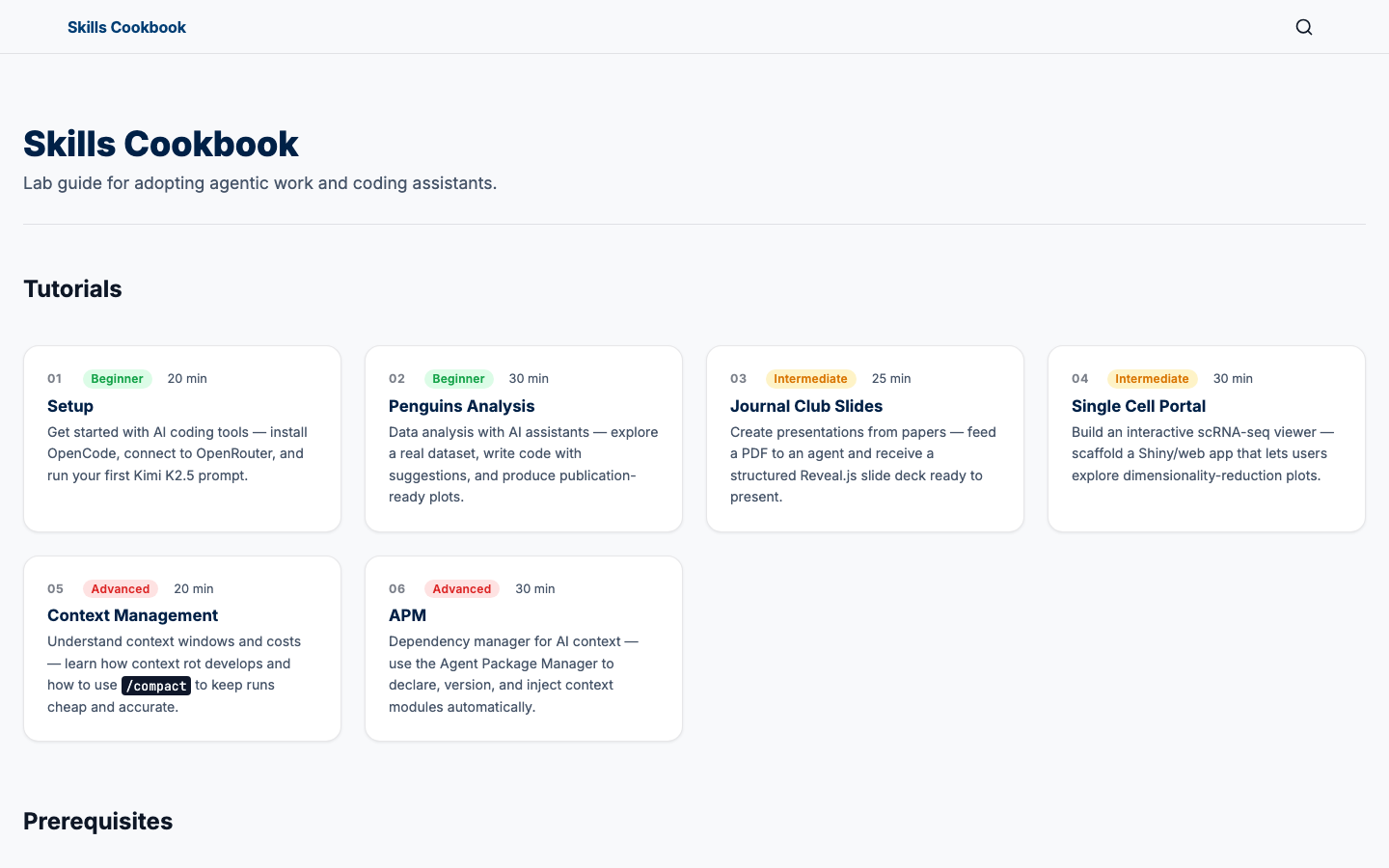
A public tutorial site built from the same teaching approach: practical workflows, real tools, and material people can use on their own.
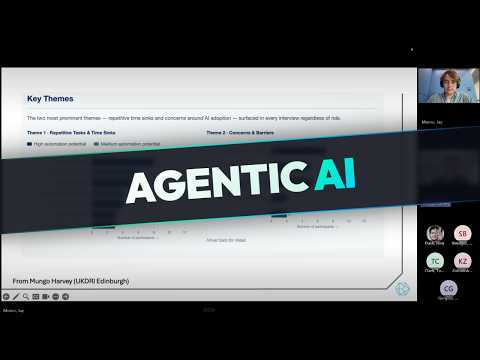
The video series shows the teaching style directly, including the life sciences introduction and the wider workshop playlist.
The programme
A free first conversation to understand the student, their subjects, their current AI use, and what the programme should focus on.
Claude Code, Codex, OpenCode, and Copilot. What each tool is for, where it helps most, and how to choose between them.
How to structure instructions, source material, and constraints so the model gives better answers.
How retrieval, reusable workflows, and agent systems fit together in practice.
How to organise notes, readings, and project material in systems like Obsidian.
How to use AI to explain, quiz, critique, and plan your own learning.
Built from real work
Built tools for Telegram and Slack covering genomics, lab workflows, literature, grants, institutional knowledge, and agentic research support.
From ClawBio hackathon teaching to UK DRI and Imperial workshops, plus the open-source Agentic Life Sciences Tutorial, the style stays practical, tool-first, and grounded in how the systems actually work.
The same approach has been used to teach research managers, students, and researchers: reduce the jargon, keep the workflow real, and build confidence through use.
About Jay
I’m a PhD researcher at Imperial College London working in computational biology and AI at the UK Dementia Research Institute. Alongside research, I build agentic tools, run workshops, teach hackathon sessions, and help people adopt these systems in ways that are actually useful.
The aim here is not to make students dependent on AI. It is to help them understand the tools, use them appropriately, and build better workflows for learning, organisation, writing, research, and revision.
Get started
The first meet and greet is free. We can use it to map the student’s subjects, goals, AI experience, and whether the programme should lean more toward writing, revision, organisation, coding, or research.